
Top Signs You Need Garage Door Service – Don’t Ignore These
A garage door that takes three seconds longer to open than it did six months ago isn’t aging gracefully. It’s pulling against a torsion spring that’s losing tension, and that spring is now doing less work while your opener motor does more, shortening the life of both. Most garage door failures don’t arrive out of nowhere. They leave a trail of small clues first, and the homeowners who catch them save themselves a bigger, more expensive repair down the line. Here are the signs we see most often in Jefferson Park, and what each one is usually telling you.
Your Door Is Getting Slower, and That’s Not Normal
A door that opens slower than it used to is a mechanical warning, not a quirk. When the speed changes, something in the system is working harder than it should, and the location of the slowdown points to the component responsible.
- Slow at the very start: The opener is straining to get the door moving. That usually points to a spring that’s lost tension and can no longer counterbalance the door’s weight, so the motor is doing the lifting.
- Slow in the middle of travel: This often means a roller is dragging in the track, or a hinge is binding. The door moves fine once it’s past the bad spot.
- Slow near the close: The door may be unbalanced, with more weight on one side, or a cable could be catching. It’s also the stage where a worn spring shows itself most clearly.
We’ve seen plenty of Jefferson Park doors where the homeowner got used to the slower speed and stopped noticing it. Six months later the opener burns out, and the real culprit was the spring all along. If your door has a Genie or LiftMaster opener that sounds labored, the motor may not be the problem at all.
Listen to What Your Door Is Telling You
The sound of a failing door is one of the most reliable diagnostic tools you have. Different noises point to different parts, and learning to tell them apart saves you from guessing.
- Grinding: Usually a worn metal roller, a dry hinge, or a bearing that’s given up. It’s a friction sound, and it gets worse with every cycle.
- Popping: Often a cable that’s starting to fray or jump its drum, or a spring that’s shifting under uneven tension. Popping deserves a same-day look; it can precede a sudden failure.
- Squealing: Frequently a roller with a bad bearing or a track that’s misaligned and rubbing.
Here’s the thing: a squeaky door isn’t a door that just needs a little oil. Some noises are harmless, and some mean a spring is about to let go. If you’re hearing something new and loud in your Jefferson Park garage, it’s worth having it checked before it becomes an emergency. Spring work is the one repair we’d never suggest a homeowner tackle alone – the tension in a torsion spring is genuinely dangerous, and the injury risk is real. Call a trained technician instead.
Your Door Shudders on the Way Down
A shuddering door is almost always a balance problem, not a track problem. Homeowners tend to blame the tracks because that’s the part they can see, but the shaking usually comes from the springs failing to hold the door’s weight evenly. When the door is unbalanced, one side falls faster or heavier than the other, and you feel it as a judder.
What happens over time is what matters. The opener motor tries to compensate for the imbalance, forcing it to work harder on every single cycle. That extra strain moves through the gears and the drive mechanism. A Clopay or Amarr door that’s been shuddering for months can end up needing both a spring repair and a new opener. Getting the balance checked early is the cheaper path by a wide margin.
If your door also refuses to stay open halfway, that’s a strong signal of a spring or cable issue that needs attention now.
The Ten-Second Spring Test You Can Do Yourself
There’s one check any homeowner can safely do to tell whether the springs are losing tension. It takes about ten seconds and requires no tools. This is the disconnect-and-lift check.
- Open the door about halfway by hand (or leave it in its raised position).
- Pull the red release cord to disconnect the door from the opener.
- Gently lift the door about a foot and let go.
A door with healthy springs will feel relatively light and hold its position without much effort. If it feels extremely heavy, or it won’t hold and drops back down, the springs aren’t doing their job. That’s a sign to stop using the door and call for service. Don’t try to adjust or replace the springs yourself – the danger here is real, and this is exactly the kind of job a trained specialist handles safely.
Gaps at the Floor or Sides Mean More Than a Draft
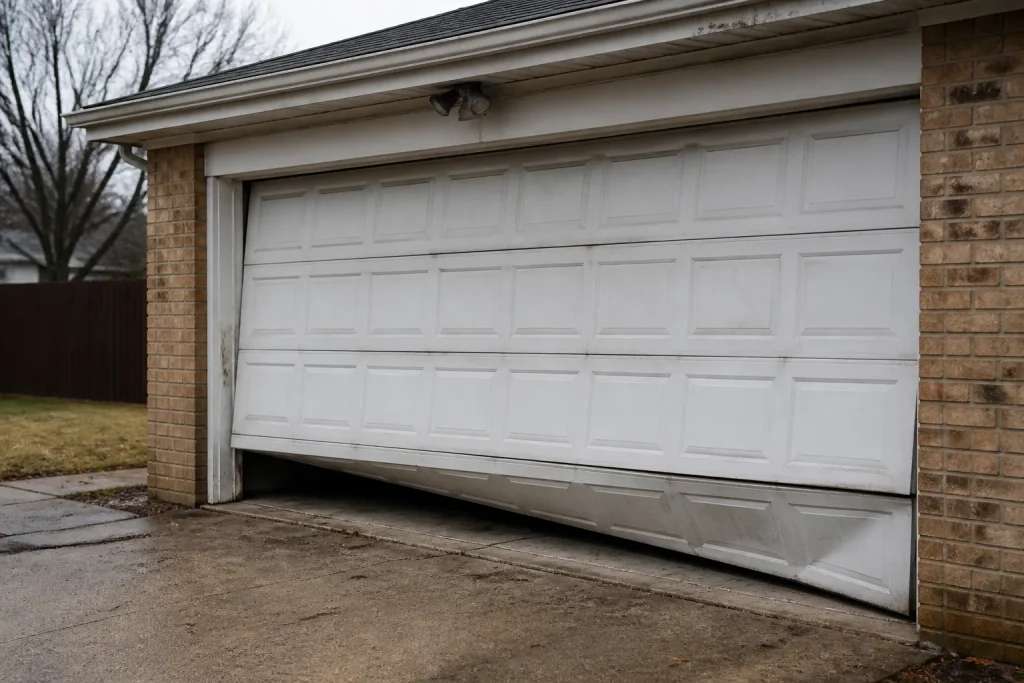
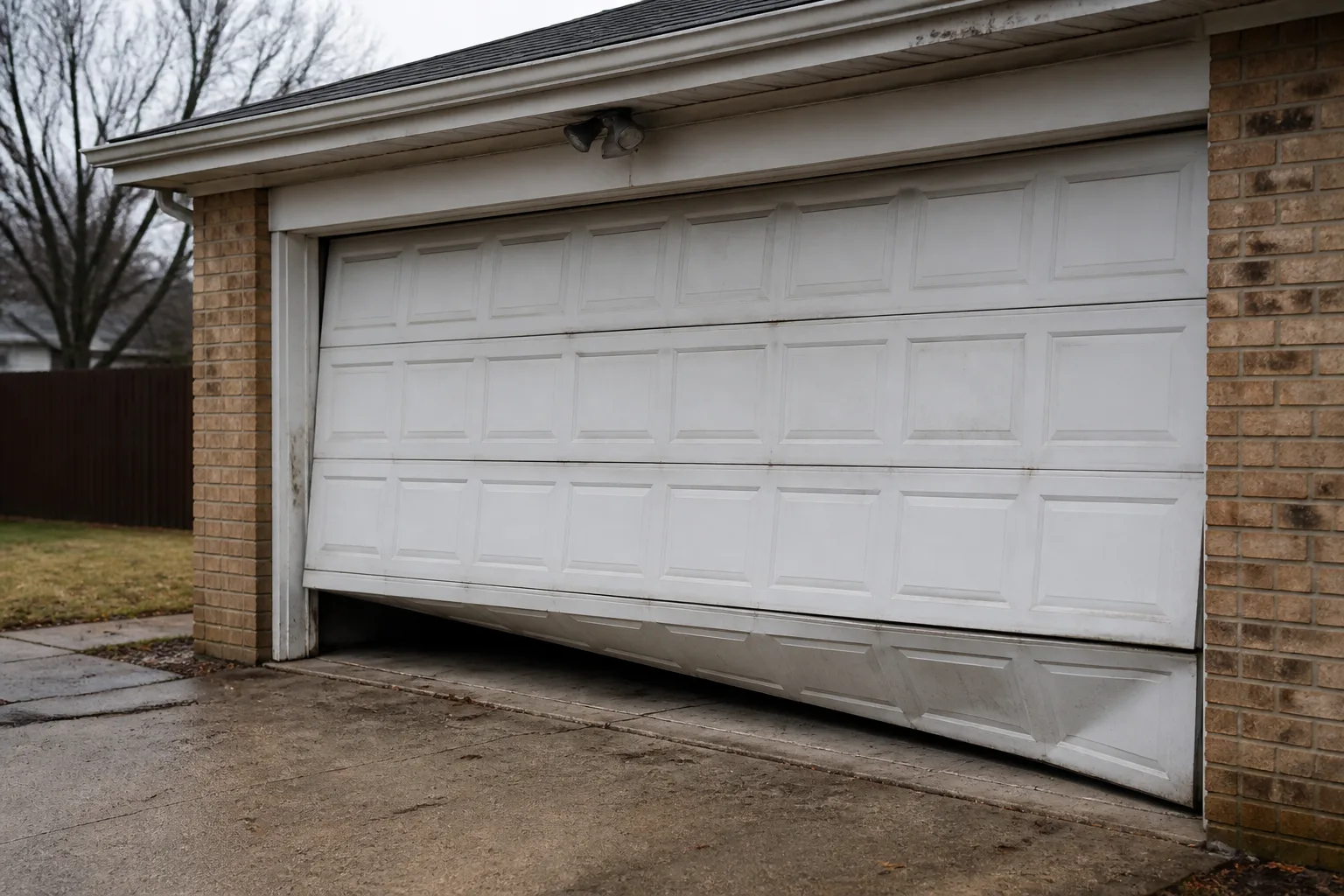
A gap under the weather seal is the one sign Jefferson Park homeowners dismiss most. In winter, it’s a draft, so people think it’s just a weatherproofing issue. But a gap can also mean the door panels have warped, or the frame has shifted, and either of those changes how the entire door moves in its tracks.
Warped panels put uneven stress on springs and rollers, and a shifted frame can pull the door out of alignment. If you’re noticing light coming through under the door, or the seal is flattened on one side and not the other, it’s worth having the door checked as a whole system rather than just swapping the seal. A Wayne Dalton door with warped panels, for example, may need a panel adjustment rather than a full replacement, and a specialist can tell the difference.
When to Call a Pro
You can safely handle some things yourself: cleaning the tracks, testing the safety reverse, and checking the disconnect-and-lift test. But the moment you’re pointing at a spring, a cable, or a balance problem, that’s a call, not a project. Same goes for an opener that’s straining, since a motor doing extra work can fail suddenly.
If you’d rather not DIY any of it, our technicians (with up to 12 years of experience) work on the brand you already have, across LiftMaster, Chamberlain, Genie, Clopay, Amarr, Wayne Dalton, Craftsman, and Raynor. We also supply garage door parts, so you’re not pushed into a full replacement when a component will do.
Related services in Jefferson Park: For garage door repair and garage door opener repair, one call covers diagnosis through the fix.
The Bottom Line
A slowing door, a new noise, a shudder, or a gap at the seal are all early warnings. Catch them early and you’re usually looking at a spring adjustment or a part replacement. Ignore them and you risk a failed opener or a broken spring that stops the door cold. Our technicians have up to 12 years of experience, and we work on the brand you already have. If you’re in Jefferson Park and need help, Garage Door Repair Jefferson Park offers free estimates. Call (877) 792-5778. We answer 24/7. Fast dispatch from 7am to 7pm, Sunday through Friday. For a planned upgrade, see our garage door installation page. You can also read more about us at Garage Door Repair Jefferson Park.
Frequently Asked Questions
The disconnect-and-lift check is the quickest way. If the door feels very heavy by hand, or won’t hold its position, the springs are losing tension. New noises and a door that’s getting slower are also strong signals. Call (877) 792-5778 for a free estimate.
Usually no. A shudder is most often a balance problem from failing springs or cables, not the tracks themselves. The imbalance strains the opener on every cycle, so it’s worth checking early. Call (877) 792-5778 for an exact quote – estimates are free.
No. Torsion springs are under extreme tension and are one of the most dangerous parts of a home to work on. This is a job for a trained technician. Call (877) 792-5778 to book a free estimate.
Not always. Sometimes a panel adjustment or a seal replacement solves it, and a specialist can tell the difference. We supply parts, so you’re not pushed into a full replacement when a component will do. Call (877) 792-5778 for a free estimate.
Written by the team at Garage Door Repair Jefferson Park.
Need Garage Door Help?
Call Garage Door Repair Jefferson Park - the local pro we connect you with is licensed and insured, here with fast help in Jefferson Park.
(877) 792-5778