
Last updated November 20, 2026
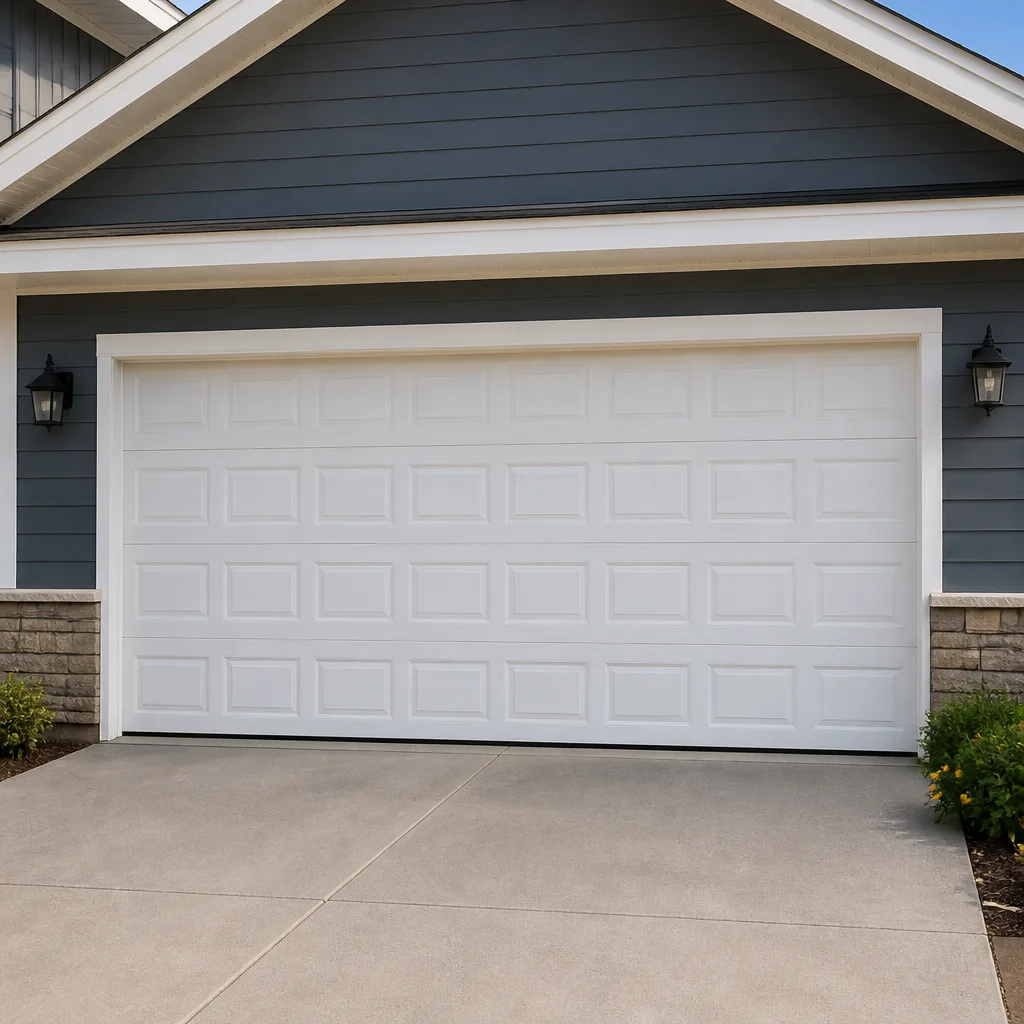 Raised-panel steel
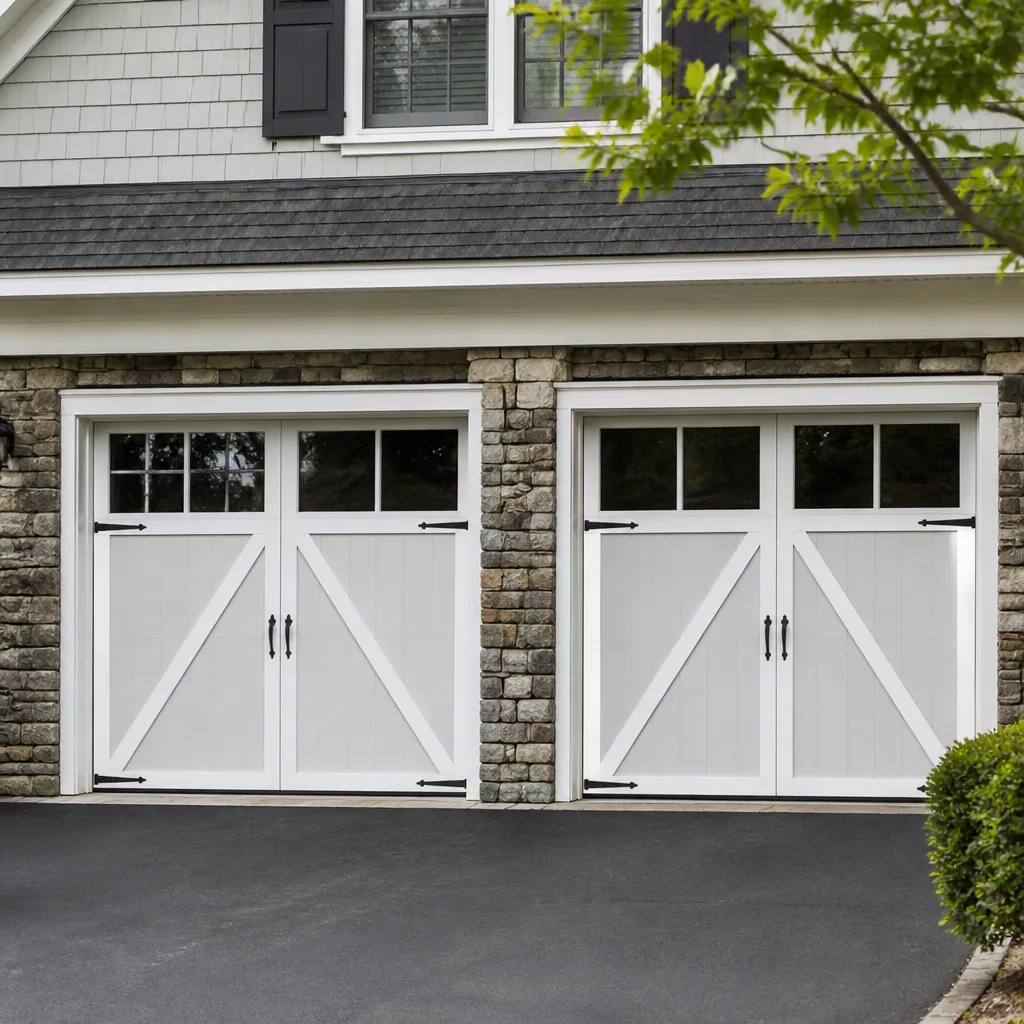 Carriage house
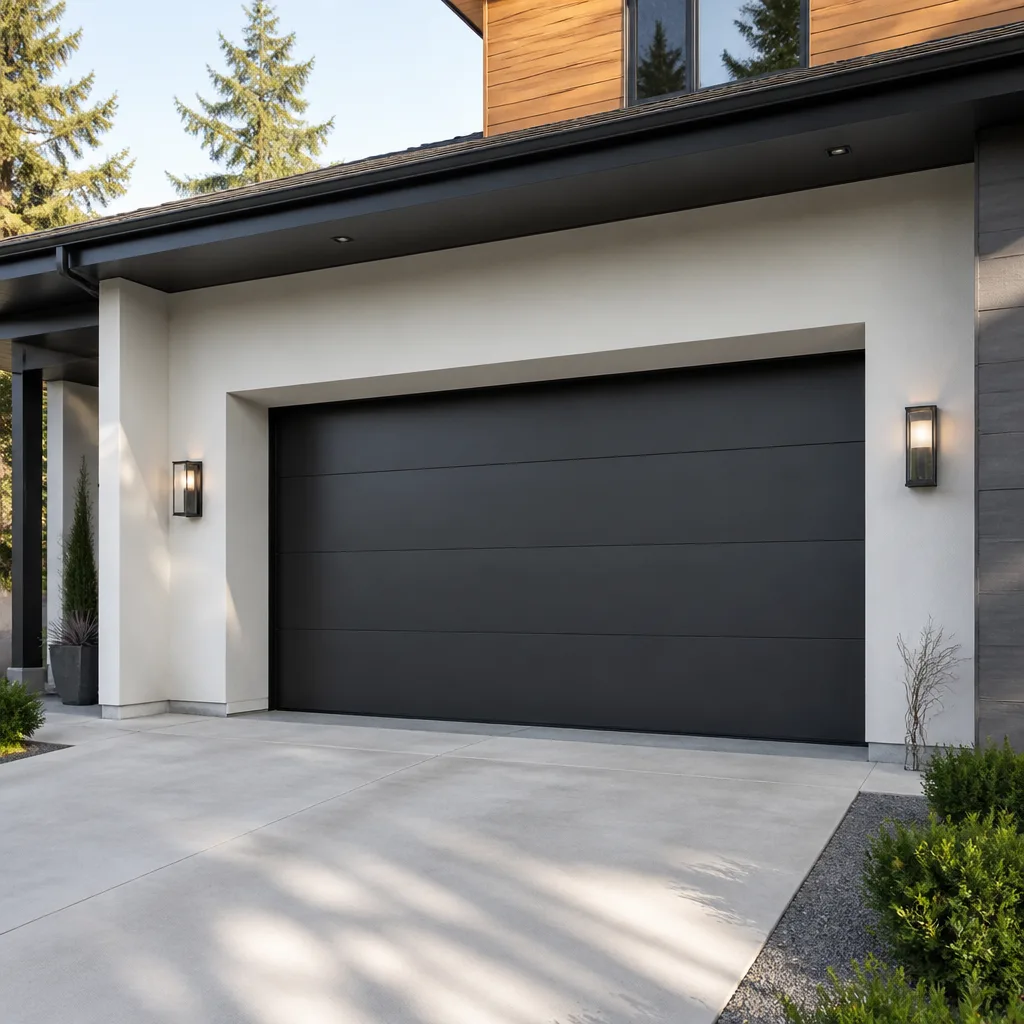 Modern flush
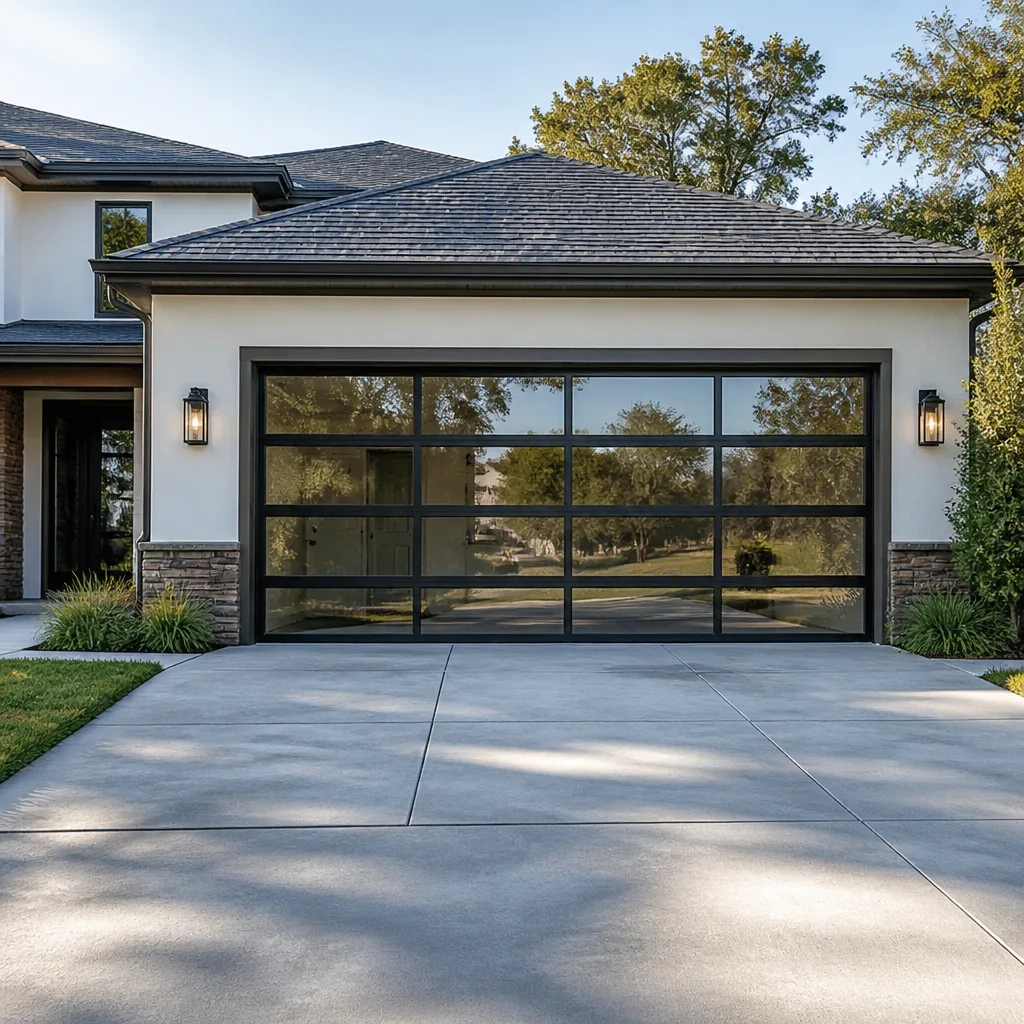 Full-view glass
 LiftMaster openers
 Chamberlain openers
Full 25-point door and opener safety check with every visit - springs, cables, rollers, tracks, and your LiftMaster or Chamberlain opener included
You get a price before we start. It does not change when the pro arrives.
Get your free estimateGarage Door Permits, Codes & Inspections in Jefferson Park, IL: What You Need to Know
A garage door replacement in Chicago technically triggers a permit requirement the moment you change the opening size or add a new opener circuit, and those two modifications happen on the majority of full replacements we see in Jefferson Park. Here’s the twist most homeowners don’t expect: the door going up and down smoothly is not the signal that everything is fine. A door that works perfectly can still be an unpermitted alteration sitting on your property record, waiting to surface at a title search or an insurance claim. This guide walks through the Chicago Building Code threshold that separates a permit-exempt repair from a permit-required replacement, what inspectors actually check, how unpermitted work shows up at sale, and how the Illinois Energy Code treats attached versus detached garages. We’ll also cover what to do if your contractor won’t pull the permit and you have to do it yourself.
Quick Answer
In Jefferson Park and the rest of Chicago, swapping a like-for-like door or repairing springs, cables, rollers, and openers generally does not require a building permit. Changing the size of the garage opening, altering the structural framing around it, or running a new electrical circuit for a garage door opener typically does require one. The Chicago Department of Buildings decides on a case-by-case basis, so the practical answer is to call your alderman’s office or the Department of Buildings before the work starts, not after.
Styles & brands we work with
- Raised-panel steel
- Carriage house
- Modern flush
- Full-view glass
- LiftMaster openers
- Chamberlain openers
Table of Contents
- What Triggers a Garage Door Permit in Chicago?
- What Garage Door Work Is Permit-Exempt?
- The Rough-In Electrical Inspection for a New Opener Circuit
- How Unpermitted Garage Door Work Shows Up on a Title Search
- Illinois Energy Code: Attached vs. Detached Garages
- How to Pull a Homeowner Permit in Chicago
- What Inspectors Actually Check
- Jefferson Park Specifics: Bungalows, Alleys, and Older Garages
What Triggers a Garage Door Permit in Chicago?
The threshold most homeowners miss is structural. Replacing a door of the same size in the same opening is a repair in the eyes of the Chicago Building Code, and repairs don’t need a permit. Changing the dimensions of the opening, widening or heightening it, replacing the header above the opening, or reframing the wall around the door is an alteration, and alterations do need one.
The second common trigger is electrical. If your existing opener is wired into a circuit that already exists, replacing the opener is a swap. If you’re adding a new dedicated circuit for a modern opener, that’s new electrical work, and new electrical work requires a permit and an inspection in Chicago.
Here’s how it breaks down in practice:
- Same-size door replacement, same opening: typically no permit.
- Opening resized (wider, taller, or new construction): permit required.
- Header or framing changes around the opening: permit required.
- New dedicated electrical circuit for an opener: permit required.
- Opener replacement on existing wiring: typically no permit.
- Spring, cable, roller, and panel repair: no permit.
We’ve walked Jefferson Park homeowners through this many times, and the answer always comes from the city, not from us. A quick call to the Department of Buildings with your address and a description of the work gets you a definitive answer the same day. It’s worth the ten minutes before a door is ordered, because once a custom door is manufactured to a non-standard size, the permit question gets a lot more expensive to fix retroactively.
If you’re planning a replacement and want to know how the timeline interacts with permits, our page on garage door installation covers how measurement, ordering, scheduling, and city requirements fit together.
What Garage Door Work Is Permit-Exempt?
The bulk of what we do in Jefferson Park falls into the no-permit category. A snapped torsion spring, a stripped gear in your LiftMaster opener, a bent bottom section after a car bumped it, a roller that’s worn flat, a cable that jumped its drum: none of that changes the structure of the building or the electrical system, so none of it needs city approval.
Here’s the practical rule we use: if the work touches only the door, its track, its hardware, or the opener mounted to the ceiling, you’re in repair territory. If the work touches the wall, the header, the framing, or a new electrical run, you’re in permit territory.
Repairs that are typically permit-exempt in Chicago:
- Spring repair and replacement – torsion or extension, one spring or a matched pair.
- Cable and drum replacement.
- Roller and hinge replacement.
- Panel replacement where the opening size stays the same.
- Opener repair or replacement on existing wiring, including Chamberlain and Genie units.
- Safety sensor realignment or replacement.
- Weather seal and bottom rubber replacement.
One thing that surprises people: a new opener on an existing circuit still has to follow modern safety requirements. Since 1993 federal law has required residential openers to have an entrapment protection system, either a working photo-eye setup or a pressure-sensing edge. If your old opener is pre-1993 and still running, replacing it is a repair, but it’s also a genuine safety upgrade, and most inspectors and technicians would tell you not to wait. Our dedicated page on garage door opener repair covers diagnosing a failing unit versus swapping it out for a newer LiftMaster or Chamberlain model.
The Rough-In Electrical Inspection for a New Opener Circuit
If your garage in Jefferson Park doesn’t have a dedicated opener circuit and you’re adding one, expect a rough-in electrical inspection before the opener goes up. This is standard Chicago process, and it’s the step most homeowners don’t know about until their electrician mentions it.
What the rough-in inspection actually covers:
- Wire gauge and circuit rating. A new opener circuit is typically 20 amps, which means 12-gauge wire. The inspector verifies the wire matches the breaker and the run length.
- Box mounting and clearances. Junction boxes have to be properly mounted and accessible, with correct clearances from framing and any stored materials.
- Grounding. The circuit has to be properly grounded, and the opener itself has to bond to the ground path.
- GFCI requirements. Chicago has its own rules about where GFCI protection applies in a garage, and a detached garage is treated differently from an attached one. Your electrician and the inspector are the people to sort this out, not a garage door tech.
- Concealed wire protection. Any wire run through framing has to be protected against nails and screws, typically with a nail plate or conduit.
After the rough-in passes, the circuit gets closed up, the opener is installed, and a final inspection closes the permit. The whole cycle typically runs a couple of weeks depending on the city’s inspection schedule. In our experience, the biggest delay in Jefferson Park isn’t the electrical work itself, it’s the gap between when the rough-in passes and when the final inspection gets scheduled. If you’re working against a sale closing date, build that slack in early.
This is one of the reasons we tell homeowners to keep the electrical work with a licensed electrician and the door work with a garage door specialist. Our technicians handle springs, openers, tracks, and doors; they don’t touch new circuit runs, and we’d never want them to.
How Unpermitted Garage Door Work Shows Up on a Title Search
Unpermitted work sits quietly on a property record until a title search pulls it up. In Chicago, the Department of Buildings keeps permit history by address, and a title company checking that record before a sale will look for open permits, expired permits, and structural changes that don’t match the drawings on file.
What happens then depends on the buyer’s lender and attorney. The common outcomes:
- Disclose it at sale. You note the unpermitted work on the seller’s disclosure, the buyer accepts the risk, and the deal typically closes with a small price negotiation or a credit.
- Retroactively close the permit. You or the buyer pulls an after-the-fact permit, the work gets inspected, and any defects get corrected.
- Remove and redo. If the unpermitted work doesn’t meet code and can’t be brought into compliance as-is, the opening or framing has to be corrected before the city will sign off.
The cost of retroactive closure varies enormously. A simple permit pulled and inspected after the fact runs a few hundred dollars in fees plus whatever corrections are needed. If the opening was enlarged improperly and the header has to be reinforced or replaced, the cost climbs into structural territory fast. That’s the scenario we want you to avoid entirely, and it’s cheap to avoid: pulling the permit on the front end costs far less than pulling it after the sale is in escrow.
If a title search has flagged unpermitted work and you need to understand what’s actually installed, our overview of garage door repair in Jefferson Park helps you sort out what’s correct and what needs attention before an inspection.
Illinois Energy Code: Attached vs. Detached Garages
Illinois has adopted a statewide energy code, and it treats garage doors very differently depending on whether the garage is attached to the house or detached from it. Most contractors don’t volunteer this distinction, and in Jefferson Park it matters, because the neighborhood has both.
Attached garage. If your garage shares a wall with the living space, the door between the two (the house-to-garage entry door) is treated as an exterior door for energy purposes, and the garage door itself is generally treated as part of the building envelope when the garage is inside the thermal boundary. New doors may need to meet a minimum insulation value, and the code also pushes for air sealing around the door and the frame.
Detached garage. A detached garage sits outside the thermal boundary of the house. The energy code doesn’t require an insulated garage door on a detached structure, and insulation is a comfort and durability choice, not a code requirement.
Why it matters practically:
- If you’re replacing a door on an attached garage in Jefferson Park, an insulated door may be required or strongly recommended, and the permit application may need to reflect the door’s insulation value.
- If your garage is detached, an uninsulated door is code-compliant, and going to an insulated one is your call based on comfort and how you use the space.
- Air sealing around the door, the frame, and any gaps is a genuine energy improvement regardless of which type of garage you have, and it costs almost nothing.
We work on Clopay and Wayne Dalton doors regularly, and both lines offer insulated models for attached garages. If you’re not sure whether your garage is inside or outside the thermal boundary, the easiest test is to look at where the insulation in the house stops. If the wall between the house and the garage is insulated, the garage is outside the boundary.
How to Pull a Homeowner Permit in Chicago
Chicago allows homeowners to pull what’s called a homeowner permit for work on their own primary residence, with the caveat that the homeowner is doing the work themselves or hiring licensed trades where required. If your contractor won’t pull the permit, this is your fallback, and it’s a real one.
Here’s the process in broad strokes:
- Confirm with the Department of Buildings what scope needs a permit. Describe the work, the address, and whether the opening size changes or new electrical is involved.
- Gather documentation. You’ll typically need a plat of survey, a description of the work, drawings or a manufacturer spec sheet for the door, and a scope of work signed by the contractor or self-prepared.
- Get electrical information from your licensed electrician. If a new circuit is involved, the electrician’s license information and the circuit specifications go in the application.
- Submit the application and pay the fees. Fees depend on the scope and are set by the city.
- Schedule the rough-in and final inspections. Coordinate with the electrician and the garage door installer so neither crew is waiting on the inspector.
The documentation that trips people up is the contractor scope. Ask your installer for a written scope on letterhead that includes the door model, size, insulation value (if relevant), and a line stating the opening size is unchanged or changed. Get that in writing before the door is ordered, because most contractors are happy to provide it but only if they’re asked early.
If your contractor is unwilling to provide scope documents or unwilling to pull a permit they should be pulling, that’s a signal worth paying attention to. Our team works on the brand you already have, whether that’s Clopay, LiftMaster, Chamberlain, or Genie, and we’ve helped Jefferson Park homeowners sort out documentation after the fact. If you’re starting from scratch, the main page on garage door repair is the right place to understand what your job involves.
What Inspectors Actually Check
When a garage door or electrical inspector comes to a Jefferson Park address, they’re not evaluating whether the door looks nice. They’re checking that the work matches the permit, meets the code at the time of the permit, and doesn’t create a hazard. Here’s what they typically look at:
- Opening dimensions match the permit. If the door or opening is a different size than what was applied for, the inspection fails.
- Structural framing and header. Any modification to the wall around the opening is checked for proper framing and load path.
- Electrical rough-in (if applicable). Wire size, box mounting, grounding, GFCI protection, and clearances as covered above.
- Opener entrapment protection. Photo-eye sensors properly mounted and functioning, or a pressure-sensing edge. This is a safety requirement on every residential opener installed since 1993.
- Fastening and bracing. Track and opener attachment to framing, and any reinforcement required by the door’s manufacturer.
- Weather seal and headroom. The door sits properly in the opening, and there’s no interference at the top or sides.
What inspectors do not do: they don’t balance springs, they don’t lubricate anything, and they don’t check that the door runs quietly. That’s our job, and it’s a different checklist. Spring balancing, cable tension, roller alignment, and opener force settings are the things a garage door specialist tunes after the inspector leaves.
This is why a good garage door installation on an unpermitted job still matters for quality. The permit confirms the structure and electrical work is correct; the door installer makes sure the door will still work correctly three winters from now.
Jefferson Park Specifics: Bungalows, Alleys, and Older Garages
Jefferson Park has a building stock that creates specific permit quirks. The neighborhood is full of bungalows and two-flats built between roughly 1915 and 1955, and a lot of them have garages at the back of the lot facing an alley. Those garages were not built to a modern standard, and the framing around the door is often original.
Some patterns we see on this block of the Northwest Side:
- Narrow original openings. Many Jefferson Park garages were built for a Model T or a 1950s sedan, and the opening is 8 feet wide, not the modern 9 or 16. Widening it is where permit requirements kick in, because it’s a structural change to the header.
- Old electrical. A lot of these garages have a single lamp circuit and an extension cord running the opener. Adding a proper circuit for a LiftMaster or Chamberlain opener is new electrical work, and that means a permit and rough-in inspection.
- Alley-facing headroom. Older garages sometimes have low headroom, which affects which door and opener combination will fit. Measuring before the permit goes in saves a redo.
- Frost heave and settling. Chicago winters push clay soil and settled slabs around, and a door that fit an opening perfectly in summer can bind in January. A door replacement is a good moment to correct the slab and frame, and if that work is happening, the permit question comes up.
Winter also matters for the timing of any permit inspection. Inspections happen on the city’s schedule, and scheduling a rough-in in the middle of a cold snap in Jefferson Park is a matter of coordination with your electrician. If you can schedule door and electrical work in a milder month, do it.
Common Mistakes to Avoid
- Assuming the contractor already pulled the permit. Ask directly and get it in writing. A verbal “we’ll handle it” is not the same as a permit number, and the person who ends up liable for an unpermitted job is the homeowner, not the contractor.
- Changing the opening size without checking first. Widening a Jefferson Park garage opening by a few inches looks cosmetic, but it’s a structural change to the header and it enrages title companies. Confirm the permit requirement before the door is ordered, because custom doors can’t be resized after the fact.
- Adding an opener circuit without a permit. New electrical is new electrical. Even if the opener itself is a simple swap, running a dedicated 20-amp circuit is permit work, and a rough-in inspection has to happen before the wire is buried in the wall.
- Skipping the insulation check on an attached garage. Illinois energy code treats an attached garage differently from a detached one. Ordering an uninsulated door for an attached garage can fail the energy review, and the door is the most expensive part to redo.
- Disclosing unpermitted work at the last minute. If a sale is close and a title search finds a garage door change that never had a permit, you’re negotiating from weakness. Disclose early and pull the retroactive permit before you’re up against a closing date.
- Pulling a homeowner permit without contractor documentation. If you go the homeowner permit route, you need a signed scope from your installer. Ask for it before the work starts, not after the door is hung and the installer is on another job.
- Confusing a door that works with a door that’s compliant. A door can run beautifully and still be an unpermitted structural change. The two are unrelated, and the title search cares about the second one.
See the difference
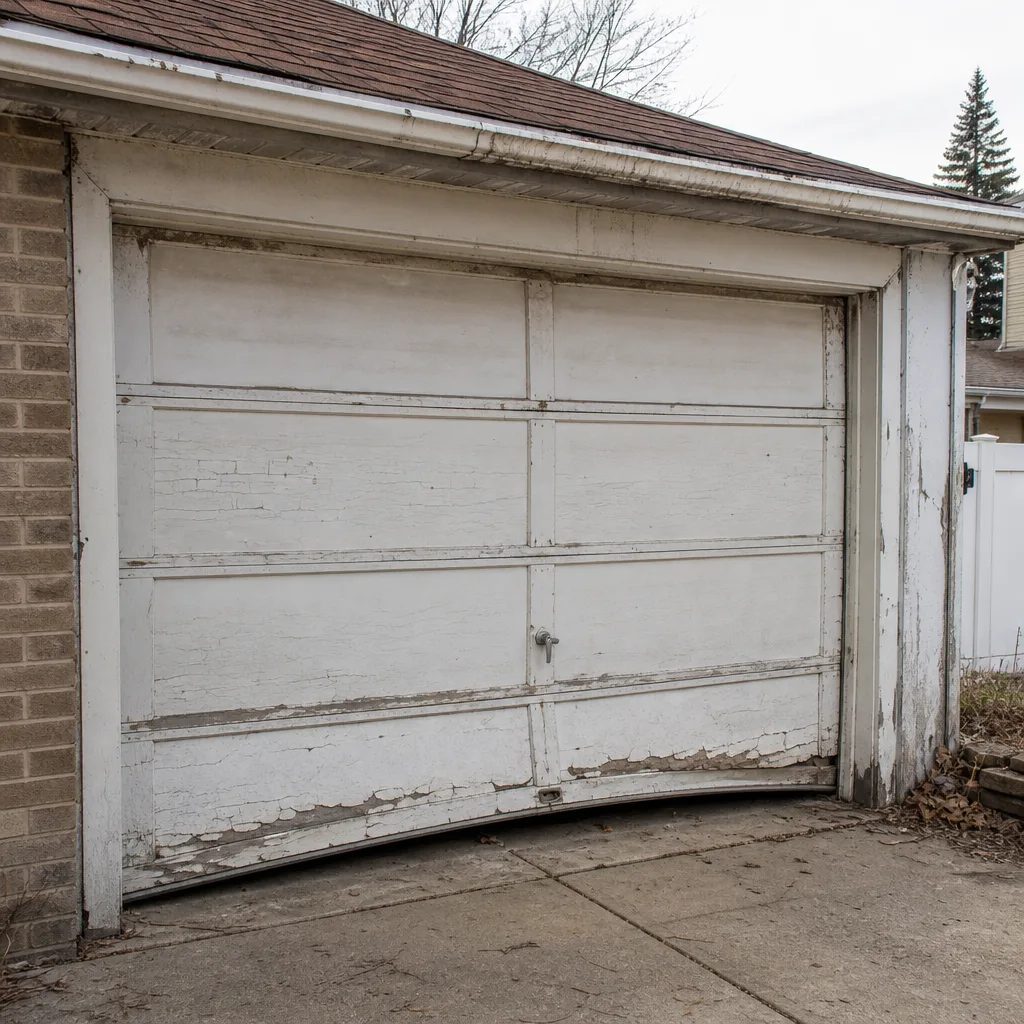 Before
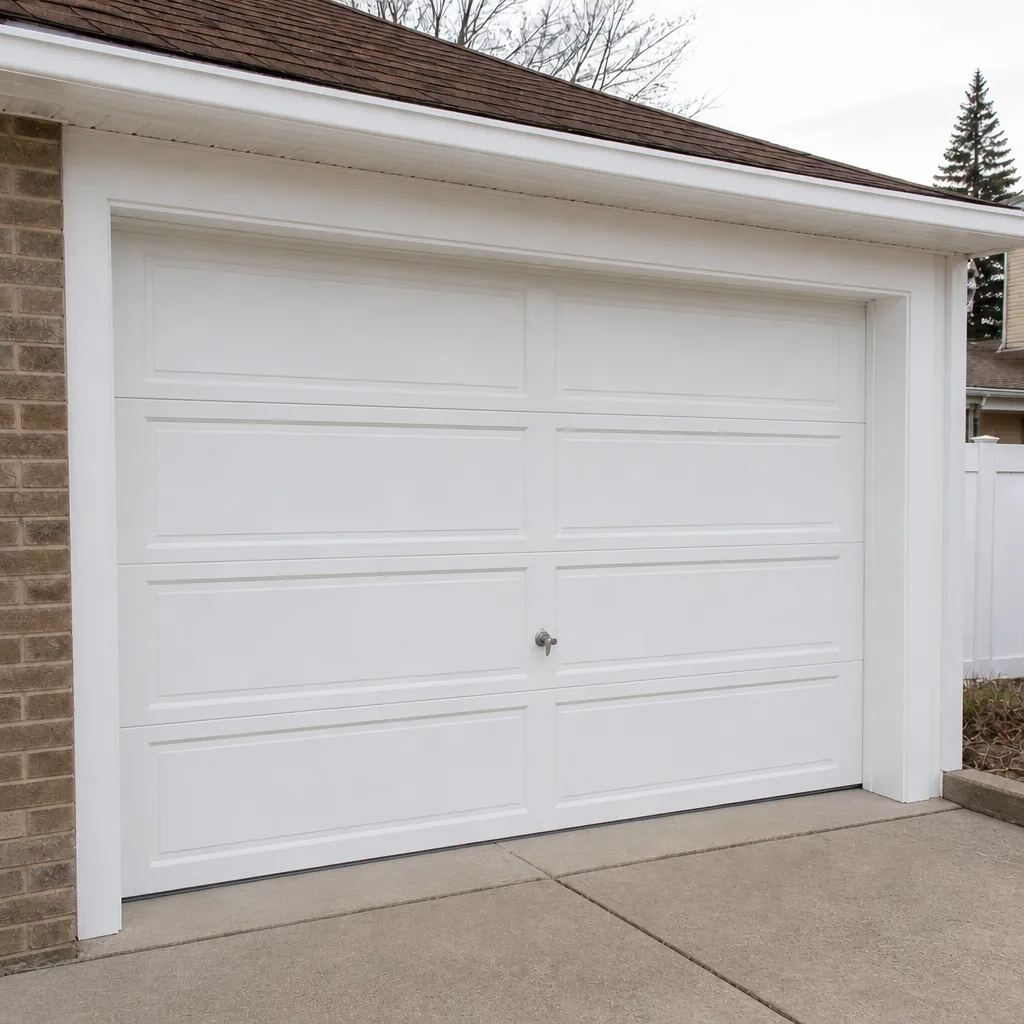 After
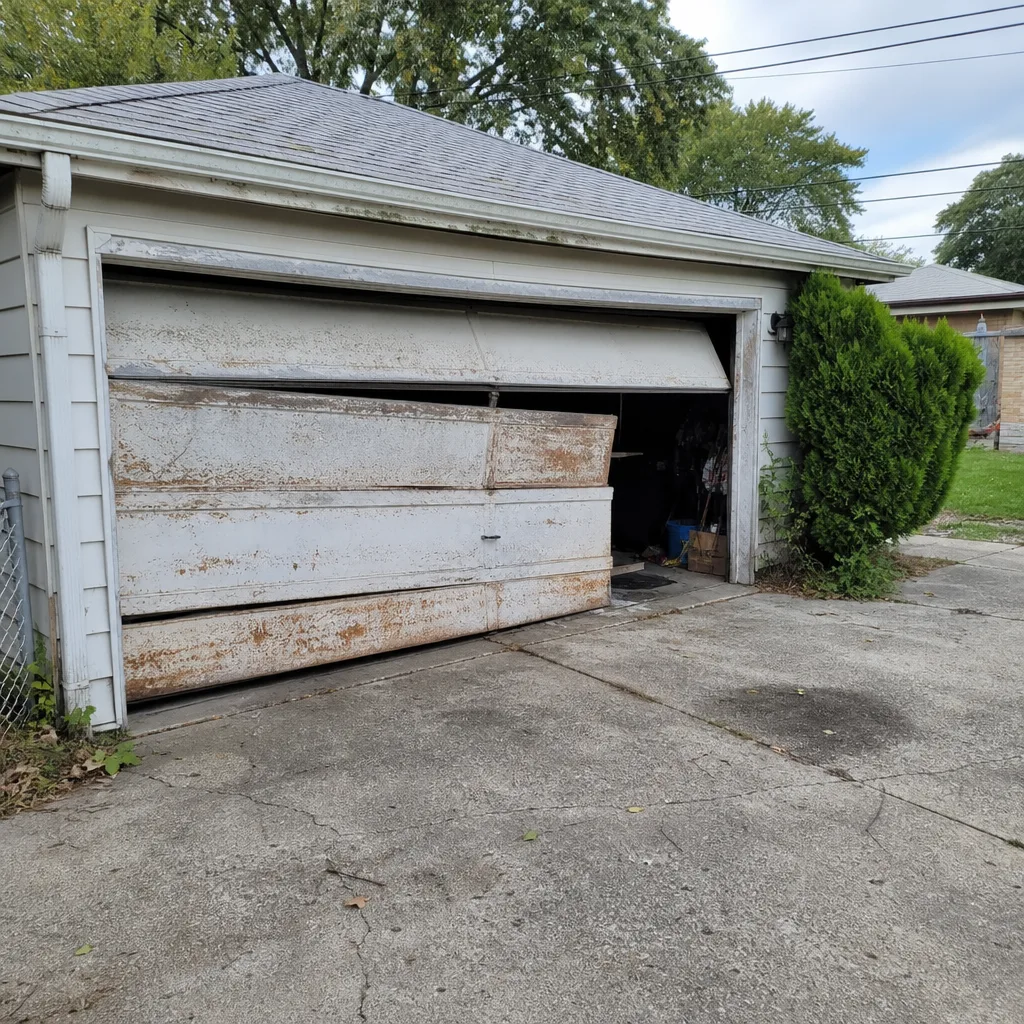 Before
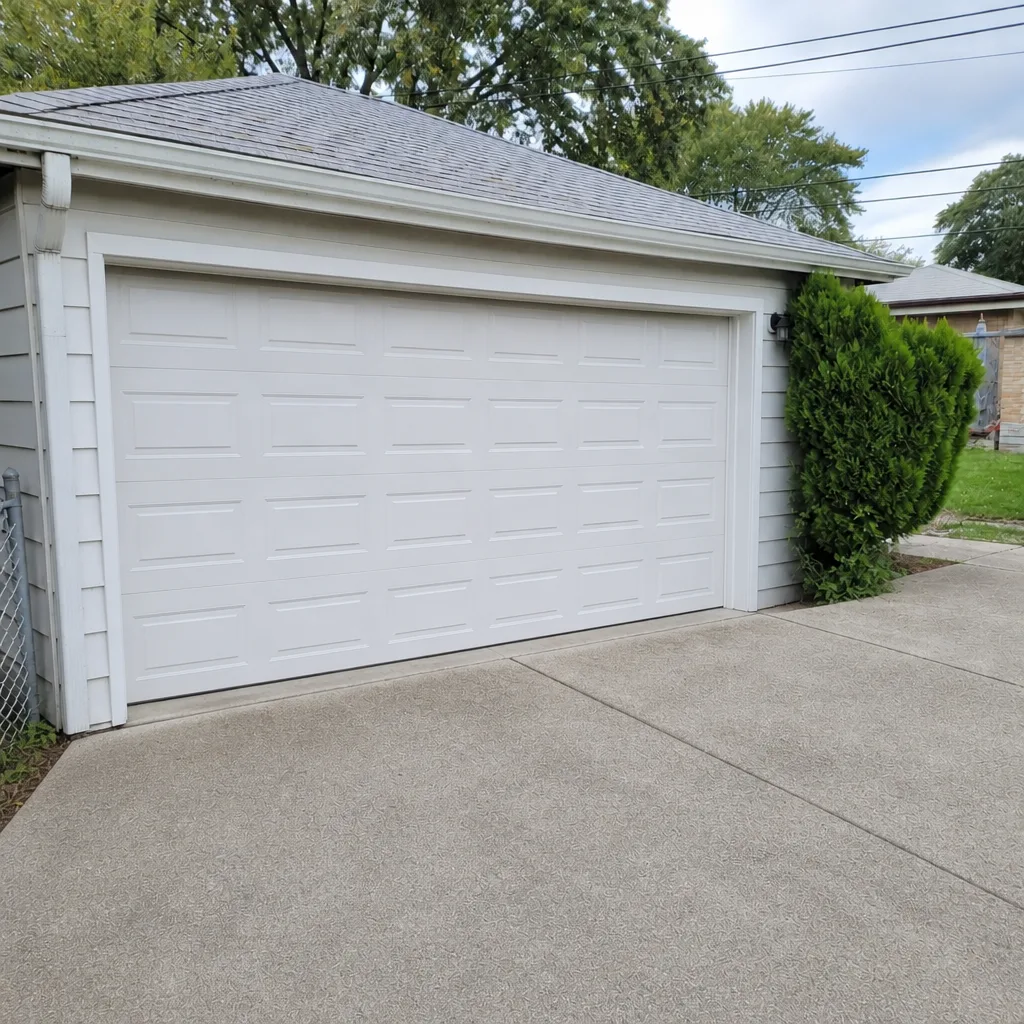 After
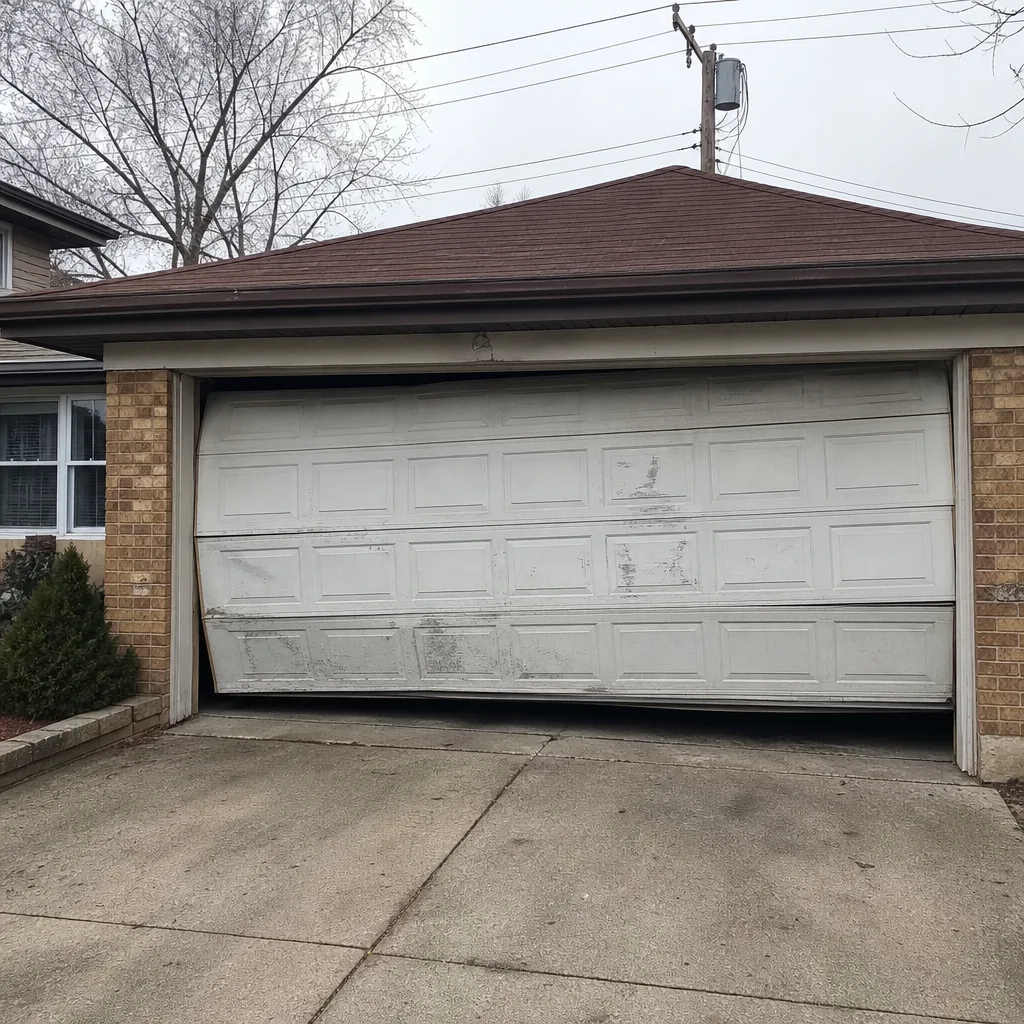 Before
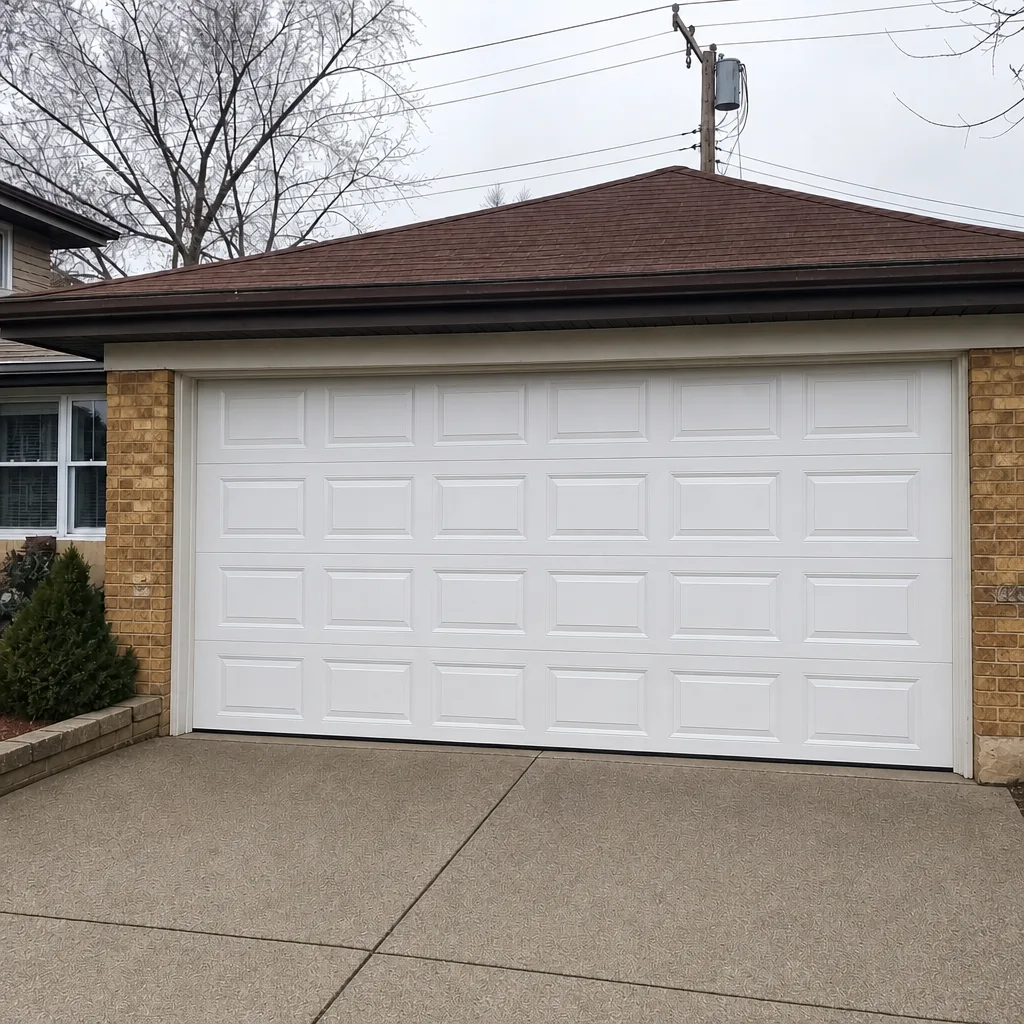 After
When to Call a Professional
You should call a professional garage door specialist, not a general handyman, when a torsion spring fails (it’s genuinely dangerous and shouldn’t be a DIY job), when a cable has jumped a drum, when a door has come off its track, or when an opener has stopped responding in a way that isn’t a simple remote or sensor fix. Call us when you’re planning a full replacement and want the door measured correctly the first time, so the permit application reflects the actual opening size. Call us when you’re buying a home in Jefferson Park and the inspection came back with questions about the garage door and its history. Call us when you want to know what’s actually installed before you pull the permit.
Garage Door Repair Jefferson Park offers free estimates in Jefferson Park, call (877) 792-5778. We answer 24/7. Fast dispatch from 7am to 7pm, Sunday through Friday. Every price is quoted and agreed before any work starts, in writing, and the written estimate sets the final price. Our technicians have up to 12 years of experience, we work on the brand you already have, and we carry parts so you’re not waiting on an order to get your door working again.
Frequently Asked Questions
It depends on whether the opening size changes and whether new electrical work is involved. A like-for-like replacement in the same opening is typically permit-exempt, while resizing the opening or adding a new dedicated opener circuit requires a permit from the Chicago Department of Buildings. Call the Department with your address and describe the work to get a definitive answer, and call (877) 792-5778 if you need a written scope for the application.
Fees vary with the scope of the work and are set by the city, so the number is different for a door opening change versus a simple electrical addition. The Department of Buildings will quote the fee when you apply. The permit fee is separate from the door and installation cost, and if you want to understand the full picture, our guide to garage door installation is a good next step: call (877) 792-5778 for a free estimate on the door work itself.
Nothing happens immediately if the work is correct and no one looks. The complication shows up later, at a title search before a sale, when an unpermitted structural change can force a retroactive permit, a correction, or a disclosure and price concession. The retroactive route is usually more expensive than pulling the permit on the front end, and it gets much worse if the framing was improperly modified.
A licensed contractor can pull permits in Chicago, and most established garage door companies do it when the scope requires. If your contractor won’t, the homeowner permit route is available for your primary residence, and you’ll need a signed scope from the contractor showing the door model, size, and what’s being changed. Ask for that scope before the door is ordered.
Under the Illinois energy code, an attached garage is treated as part of the building envelope, so an insulated door may be required or strongly recommended on a replacement. A detached garage sits outside the thermal boundary and doesn’t have the same insulation requirement. Clopay and Wayne Dalton both offer insulated models that satisfy the requirement on the attached side.
A rough-in inspection checks the wire gauge against the breaker size, box mounting and clearances, grounding, GFCI requirements, and any concealed wire protection, before the wall is closed. It’s a permit-driven step for a new dedicated 20-amp circuit, and it’s separate from the garage door installation itself. Our team handles the door and opener, and a licensed electrician handles the circuit. Call (877) 792-5778 with any questions about the door side of the job.
The Bottom Line
The permit question in Jefferson Park comes down to a simple test: does the work touch the opening size, the framing, or the electrical system? If yes, expect a permit, an inspection, and a paperwork trail that will show up at any future sale. If no, you’re in repair territory and the permit rarely comes up. The two triggers that surprise homeowners most are resizing an opening and adding a new opener circuit, and both are cheap to permit correctly and expensive to fix retroactively. Illinois energy code adds a third wrinkle for attached garages, where insulation requirements apply that don’t exist on a detached structure. Pull the permit on the front end, get your contractor’s scope in writing, and call a specialist for the door work itself.
Call (877) 792-5778 for a free estimate. We answer 24/7. Fast dispatch from 7am to 7pm, Sunday through Friday. Every price is quoted and agreed before any work starts, and the written estimate sets the final price. We work on LiftMaster, Chamberlain, Genie, Clopay, Amarr, Wayne Dalton, Craftsman, and Raynor systems, and we handle everything from a spring repair to a full installation in one call.
Written by the team at Garage Door Repair Jefferson Park.